Why Your Mobile Setup Is Still Too Heavy (And How to Fix It)
There's a moment every mobile hunter knows. You're a mile and a half into public timber, your boots are wet, it's still dark, and that pack feels like it's got a small anvil in it. You keep telling yourself the weight is worth it. But is it? In early 2025, a wave of new gear forced a hard reset on that question — and the answer was pretty uncomfortable for a lot of hunters carrying legacy setups.
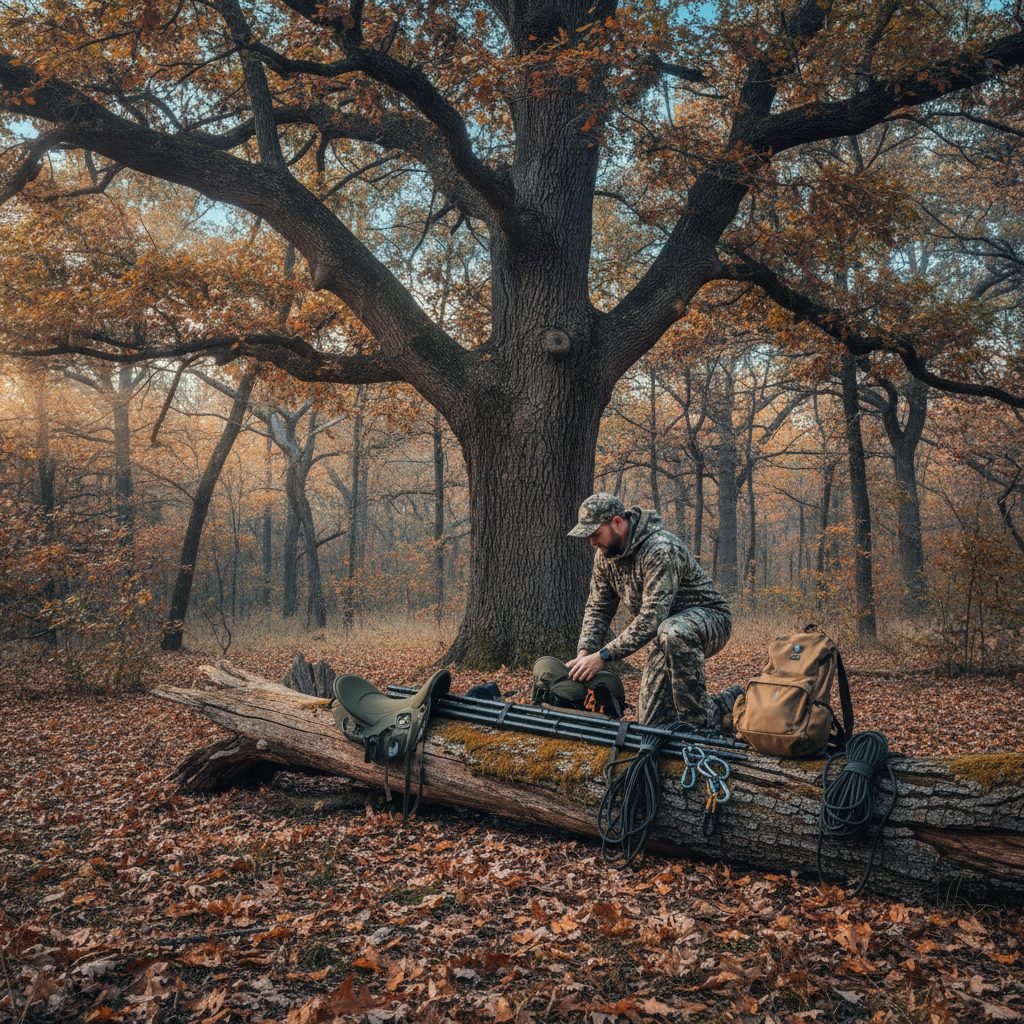
The mobile deer hunting world had been trending lighter for years, but 2025 felt like the year the conversation stopped being theoretical. New materials, refined attachment systems, and a handful of purpose-built complete kits arrived that made a sub-ten-pound base system — saddle, platform, sticks, and pack — genuinely achievable for the first time without exotic DIY work or three-year waiting lists.
The Full-System Mindset Is the Real Unlock
Here's where most hunters go wrong: they buy a ultralight saddle, pair it with heavy sticks they already owned, throw it all in a pack that was designed for a weekend backpacker, and wonder why the setup doesn't feel dialed. Weight savings in saddle hunting are cumulative. Every ounce you shave from four different components compounds into something you actually feel on mile two.
The Trophyline HyperLite system crystallized this idea heading into 2025. Built around Magnite — a material that is lighter than aluminum yet meaningfully stronger — the HyperLite platform and matching sticks gave hunters a platform-and-stick pairing where both pieces were engineered from the same material philosophy. The kit is built upon the HyperLite platform and sticks, made from a groundbreaking material called Magnite, lighter than aluminum but stronger, and lighter than strength-equivalent carbon products. When Trophyline's team ran this system through an entire 2024–2025 hunting season across multiple states and terrain types, they highlighted it as perhaps the lightest saddle hunting pack, platform, and stick system in existence — a setup tested in multiple states, situations, and terrain types.
That kind of real-world field validation matters more than lab numbers. Any company can publish a weight spec. Fewer can say the system held up through a full season of diverse terrain.
Do the Math on Your Own Kit
Pull out your current setup and actually weigh it. Not the advertised weight — the hunting-ready weight with ropes, carabiners, ascenders, and lineman's belt included. Most hunters are shocked. A lot of mid-tier stick setups run heavier than advertised because companies routinely omit the weight of straps, buckles, and attachment ropes from their published specs. That gap adds up fast across a four-stick system.
The Tethrd One Stick highlighted this honestly. At just one pound per stick including the attachment method, the One Stick is the best-selling ultralight climbing stick in the world — built with aerospace-grade titanium and paired with the patented DynaLoc® attachment system for effortless setup and rock-solid stability. More importantly, that weight claim includes everything you need to actually attach the stick to a tree. Compare that to whatever's sitting in your pack right now, all-in weight. The delta might surprise you.
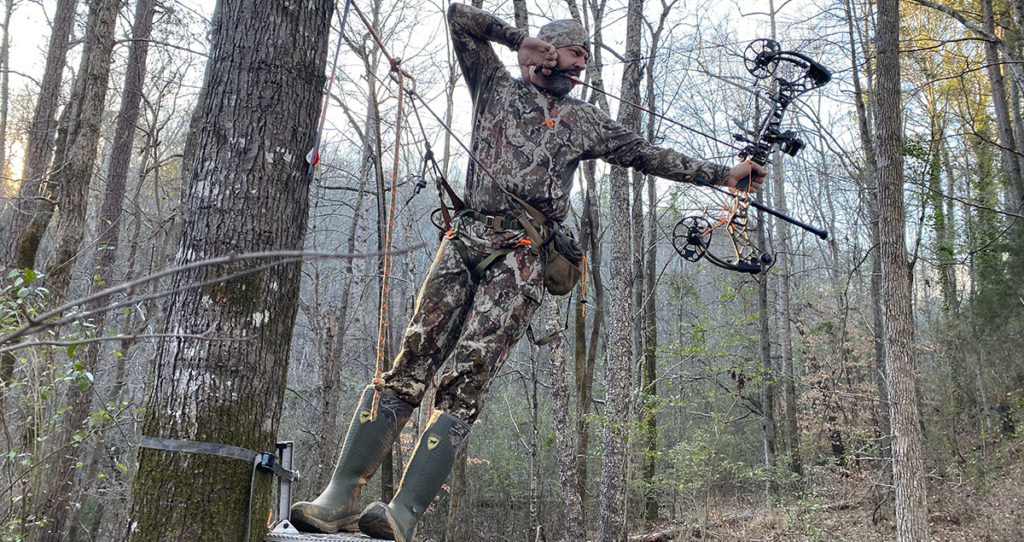
If you're running the one-stick-and-rappel method, the weight argument goes even further. Carrying only one stick significantly lightens your load — advantageous for long treks into public land. With less gear, moving between spots is quicker and less cumbersome. With fewer stick placements, there's less chance of making noise. And deploying, ascending, descending, and packing up becomes unbelievably faster than other methods. The tradeoff is a real learning curve and a commitment to practicing your rappel system before you're twenty-five feet up in the dark.
Three Places Most Hunters Leave Weight on the Table
- The platform: A heavy platform is the most common anchor dragging down otherwise light systems. If your platform is still a chunky aluminum design from three seasons ago, this is your biggest single savings opportunity. New material options like Magnite and carbon fiber have changed the math significantly.
- The pack: Saddle hunting packs are their own category. A standard hiking pack carries weight inefficiently for this application — you want something that integrates with your saddle, compresses down tight, and doesn't swing when you're on the tree. Dead weight in the pack design itself is real.
- Redundant safety gear: This one's nuanced. Never cut corners on your tether or lineman's system. But a lot of hunters carry two of everything out of habit rather than need. Audit the carabiners, the backup devices, and the rope lengths you're actually using versus what's just riding along.
Lighter Means More Places, More Kills
This isn't about gear nerdery for its own sake. A lighter, more mobile setup offers significant weight reduction and improved mobility — making it an attractive option for serious saddle hunting enthusiasts. Translation: you go to trees other hunters won't bother with. You make the 6 a.m. wind shift move instead of sitting on a dead set because you don't want to carry all that gear to a new tree. You hunt harder, later in the season, deeper into the property.
The best mobile hunters treat their kit like endurance athletes treat their race gear — nothing rides along without earning its spot. Go weigh your setup. Then figure out what's dead weight and what's doing work. That's where 2025's gear conversation was really pointing all along.