Food, Pressure, and the Beaver Moon: Your Late-November Saddle Hunting Game Plan
The chasing is done. Bucks are running on fumes, does are cycling off, and the woods that felt electric two weeks ago now feel like a library that just closed. A lot of hunters hang it up here. That's your advantage.
Right now — the week of November 20 — is one of the most underrated stretches on the whitetail calendar. Mature bucks are locked into a simple survival equation: cover, calories, repeat. They're predictable in a way they haven't been since early October, and if you're willing to pivot your mobile setup, you can be waiting in exactly the right tree.
Stop Hunting Rut Sign. Start Hunting Food.
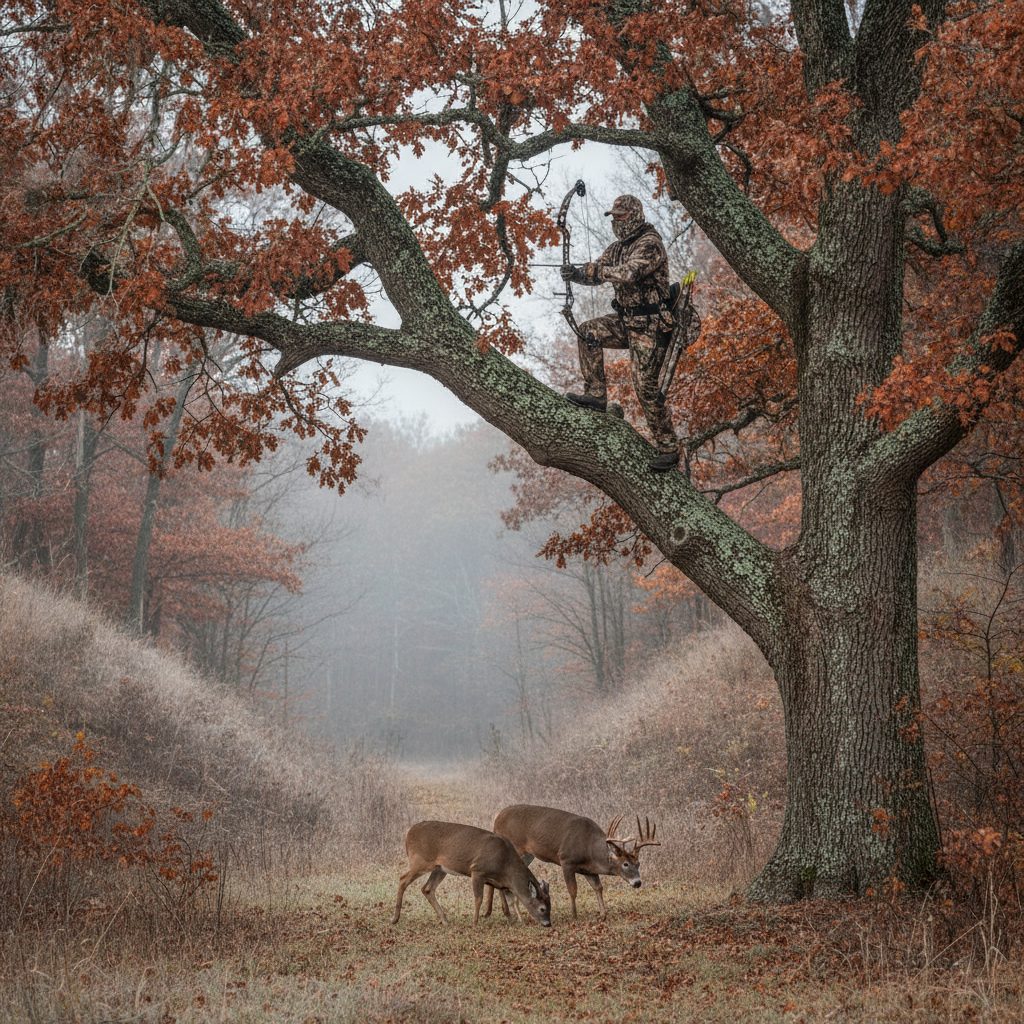
The mental shift is the hardest part. Scrapes are cold. Rubs don't tell the story anymore. What tells the story right now is fresh tracks heading toward food. Late-season deer — especially post-rut bucks who've shed serious body weight over the past three weeks — are focused almost entirely on replenishing energy reserves. Winter wheat, standing corn, any remaining grain fields, late-dropping mast. Find the groceries, hang your sticks above a clean entry, and you're in business.
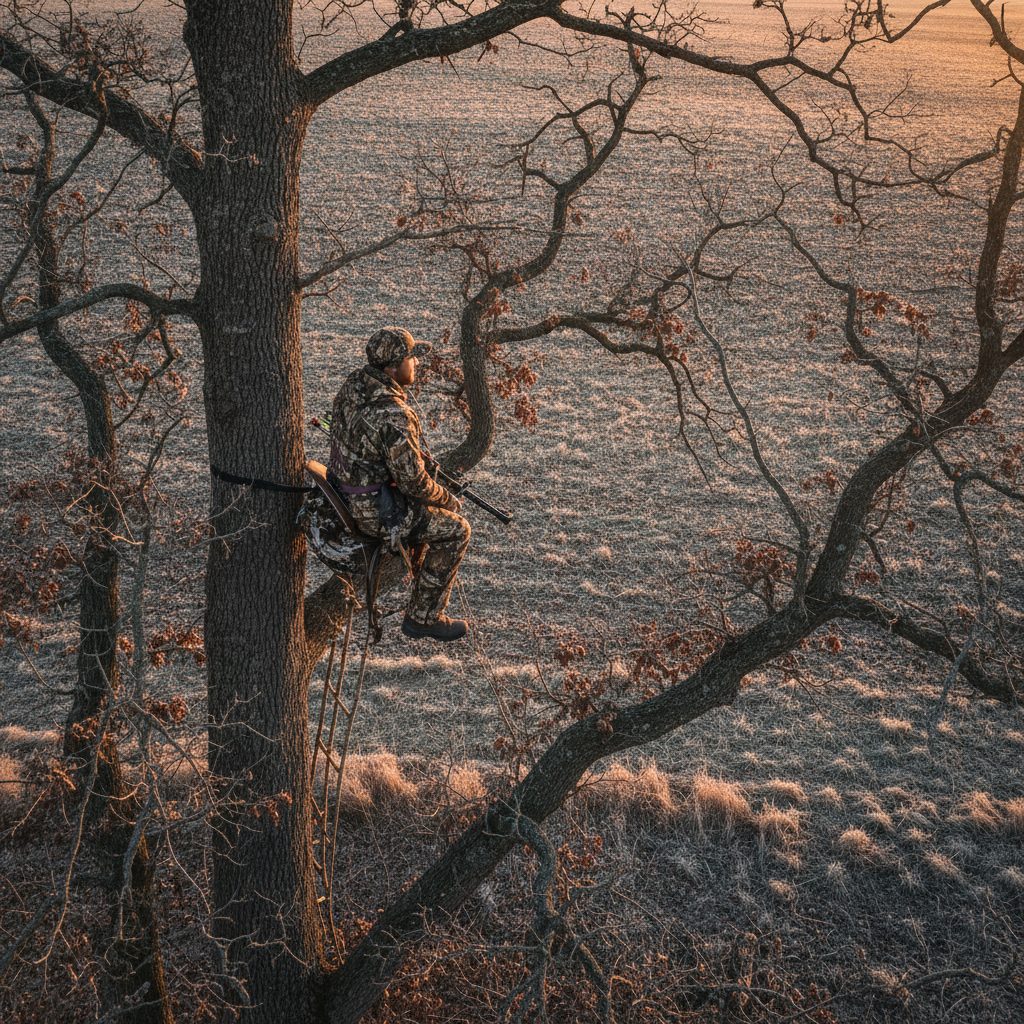
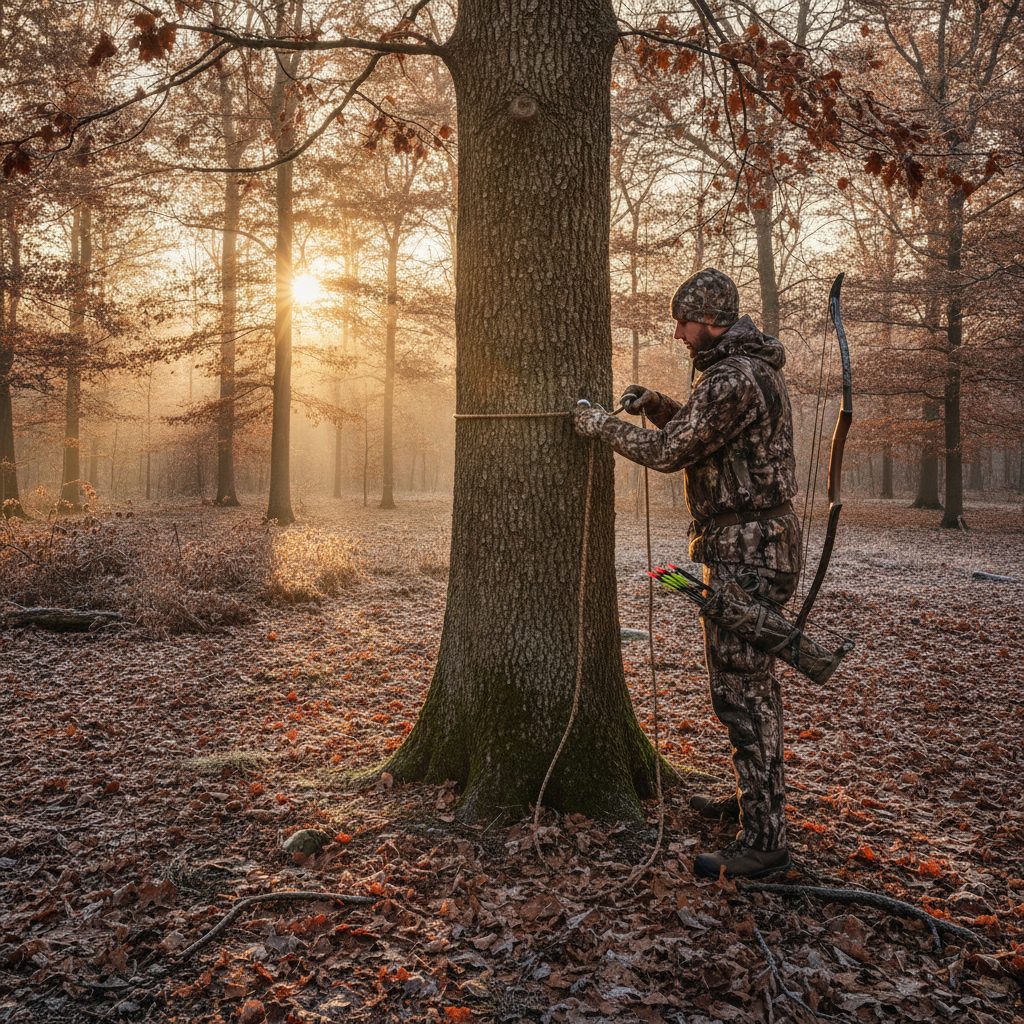
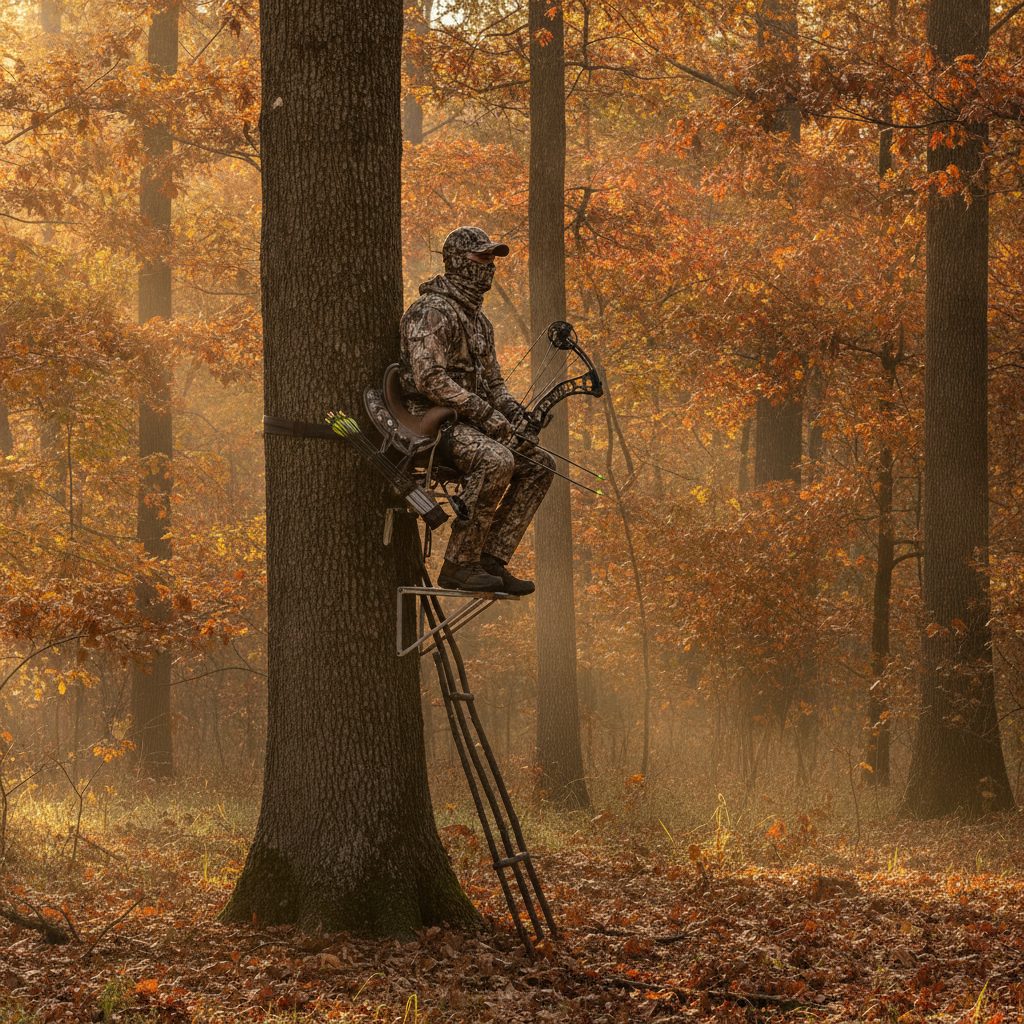
The saddle hunting system is purpose-built for exactly this kind of rapid repositioning. You can scout an evening food source on a Monday, slip in quietly Tuesday morning to find the best stem between the bedding thicket and that bean field edge, and be sixteen feet up before legal light Wednesday. No ladder stand to drag, no permanent hang-on to leave behind. That's the whole game in late November.
The Beaver Moon Window Is Coming — Use It
Here's a timely wrinkle: the November 24th Beaver Moon supermoon is the first hunting-season supermoon of 2026, and that November 22–26 window is worth treating like a second wind. Increased lunar brightness tends to push more deer movement into those low-light morning and evening edges. All-day sits become more productive, not less, because bucks that fed hard overnight may still be on their feet at first light filtering back toward secure cover. Pack a lunch. Stay in that tree.
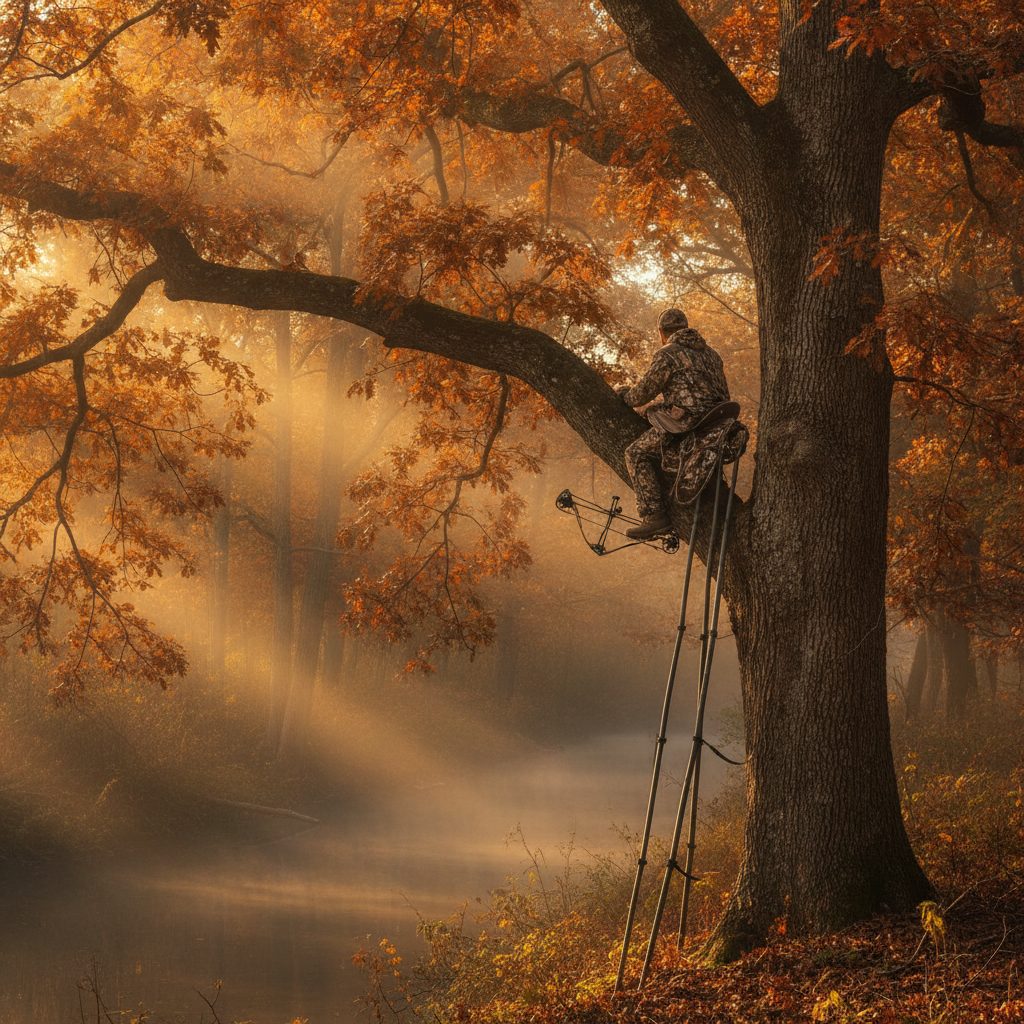
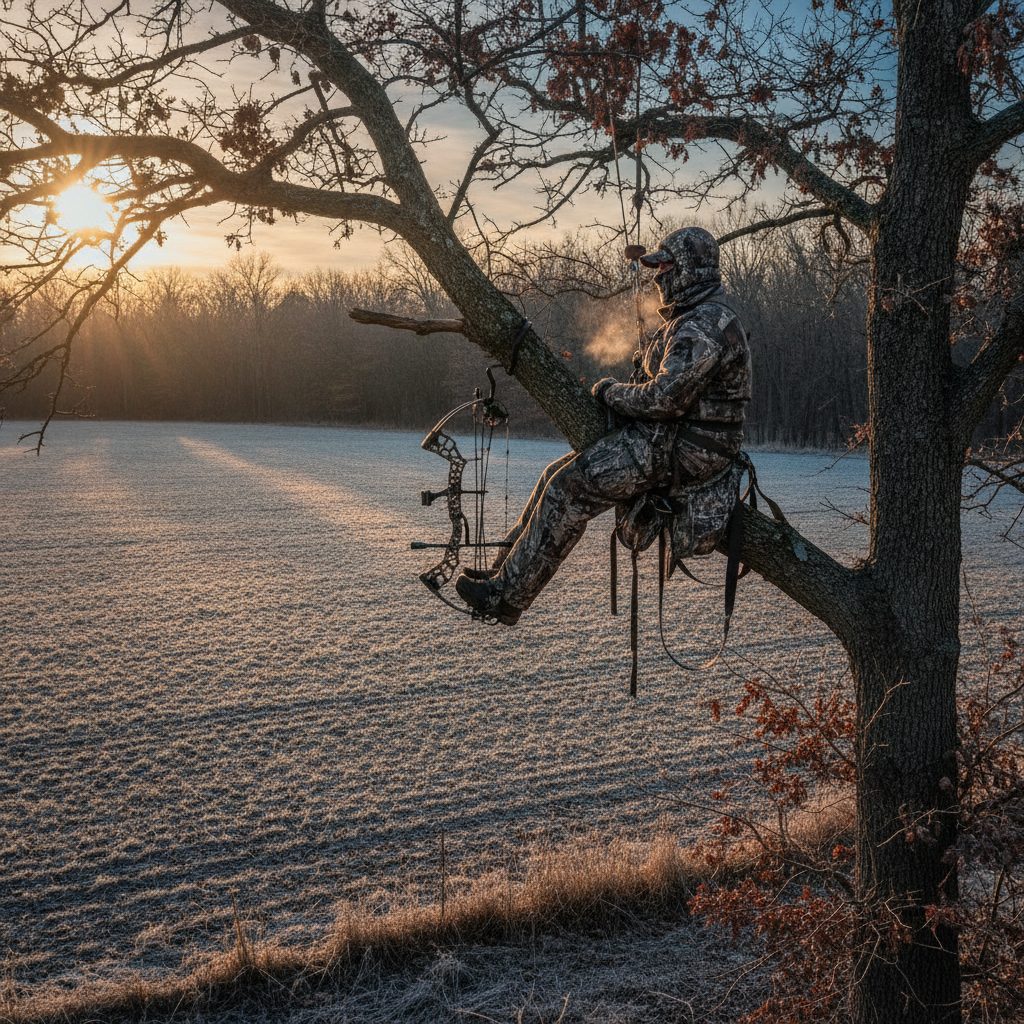
That's where your gear choices start mattering in a different way. Comfort and packability aren't just about convenience in late November — they're about whether you're physically willing to sit from can to can't in 28-degree air. Saddles with an expanding panel design, like those with added back support that opens up under load, are earning their keep on these long sits. Same goes for platforms wide enough to shift your weight without every adjustment sounding like a car wreck.
Mobile Access Is the Real Edge Right Now
Hunting pressure has had two months to teach every mature deer on your property which entry routes smell like humans. The saddle hunter's ace in the hole is the ability to use unconventional access — ditch crossings, creek bottoms, field edges under the right wind — without being anchored to wherever you hung a stand back in September. That flexibility is worth more in late November than any single piece of gear in your pack.
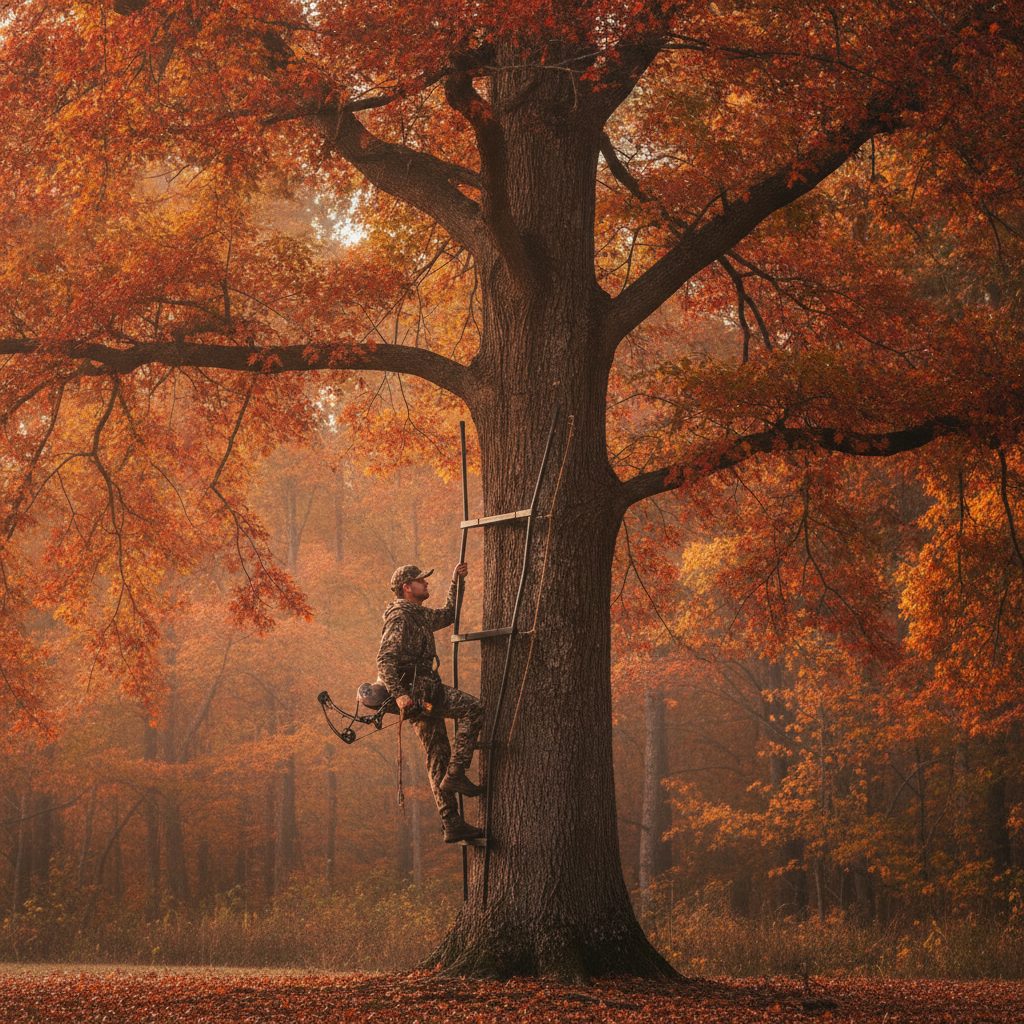
Keep your climbing stick count lean. This isn't the time to haul a heavy rig; it's the time to move fast and get gone when the wind shifts. Ultralight carbon or quality aluminum sticks that collapse tight to your pack mean you can cover ground, find the sign, and get up a tree in a fraction of the time it takes a conventional hunter to even consider moving their setup.
- Hunt afternoons hard. Evening hunts toward food are the highest-percentage play this week. Deer funnel toward calories before dark with a reliability you won't see again until a cold front locks them in.
- South-facing slopes for morning setups. Worn-down bucks bed where the sun hits first. Find those thermal pockets and hang above the downwind edge.
- Keep entry routes religious. Cold, still November air carries scent farther and longer than any other time of year. One blown entry can kill a spot for a week.
- Don't abandon transition cover. The staging zones between thick bedding and open food — inside corners, creek bends, brushy fencerows — are worth a saddle hang even if the buck sign looks old. Deer don't stop using them; they just move through faster and tighter to dark.
The Saddle Advantage Nobody Talks About
There's a psychological edge here that rarely gets mentioned. Because mobile hunters aren't emotionally attached to a fixed stand location, they move more willingly when conditions change. A cold front rolls in and reshuffles deer movement? The saddle hunter adjusts tomorrow morning. The conventional hunter waits for the deer to come back to the ladder stand he's had on that oak since August.
Late November rewards hunters who can read fresh sign and respond. The post-rut, pre-hard-winter transition is a short window — maybe ten days where food-based movement is predictable before cold weather either locks deer down or pushes them nocturnal for good. Don't waste it sitting on old intel. Get in, read the woods, hang where the sign says hang, and trust the system that lets you do all of that in a single morning. That's saddle hunting's whole value proposition, and there's no better time of year to prove it than right now.