Hunt the Chase, Survive the Lockdown: A Saddle Hunter's November Rut Playbook
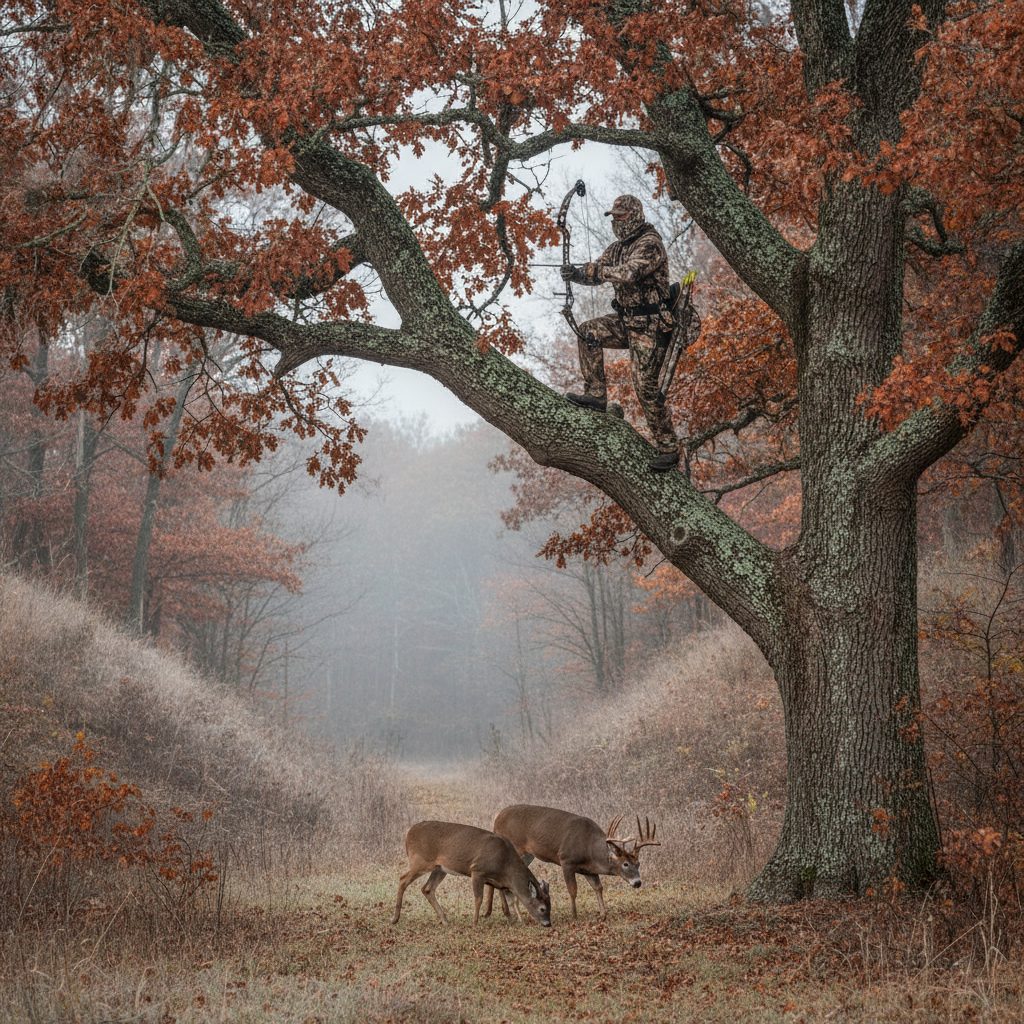
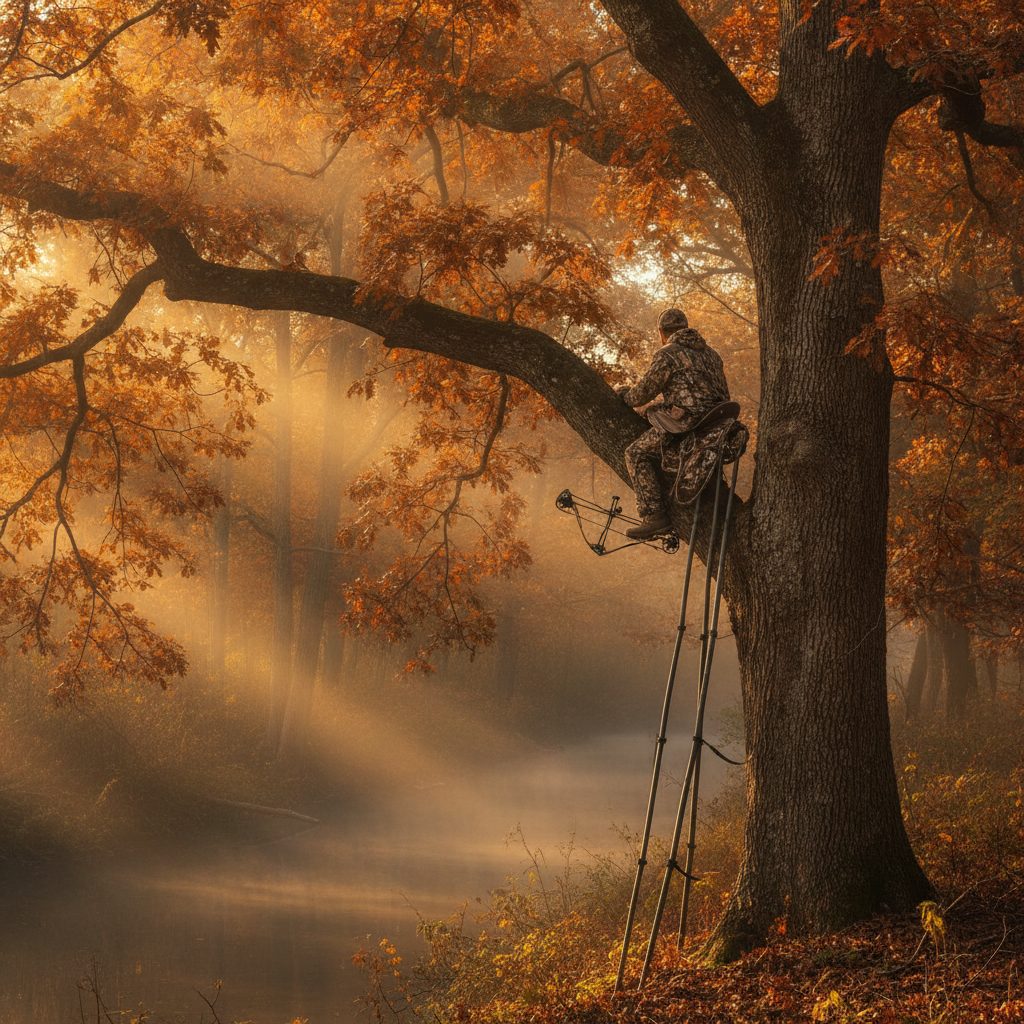
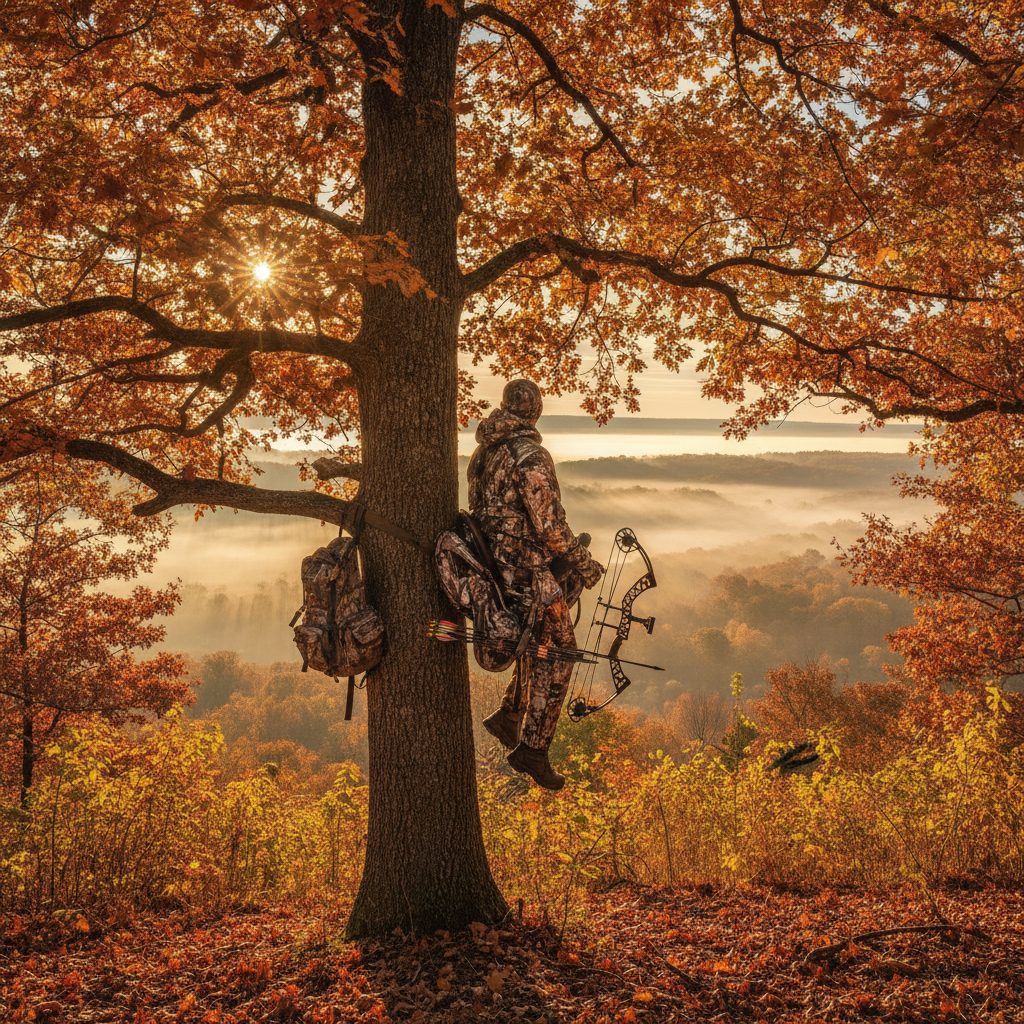
If you're reading this on November 2nd and your saddle is still hanging on a hook in the garage, close this tab and go pack a bag. The 2026 whitetail rut chase phase is on across the Midwest and Northeast — and the next ten days are, without exaggeration, the best saddle hunting of the year. Don't waste them chasing a fixed hang-on you set in September.
Where We Are Right Now
Across the Midwest and Northeast, bucks are abandoning their core areas and putting miles on their hooves looking for the first estrous does. They're burning daylight. They're crossing ground you've never seen them on. Old scrape lines don't mean much anymore — the buck isn't looking for a signpost, he's looking for a doe. That shift is the whole ballgame for a mobile hunter, because the deer's new travel pattern and your ability to respond to it in real time are basically made for each other.
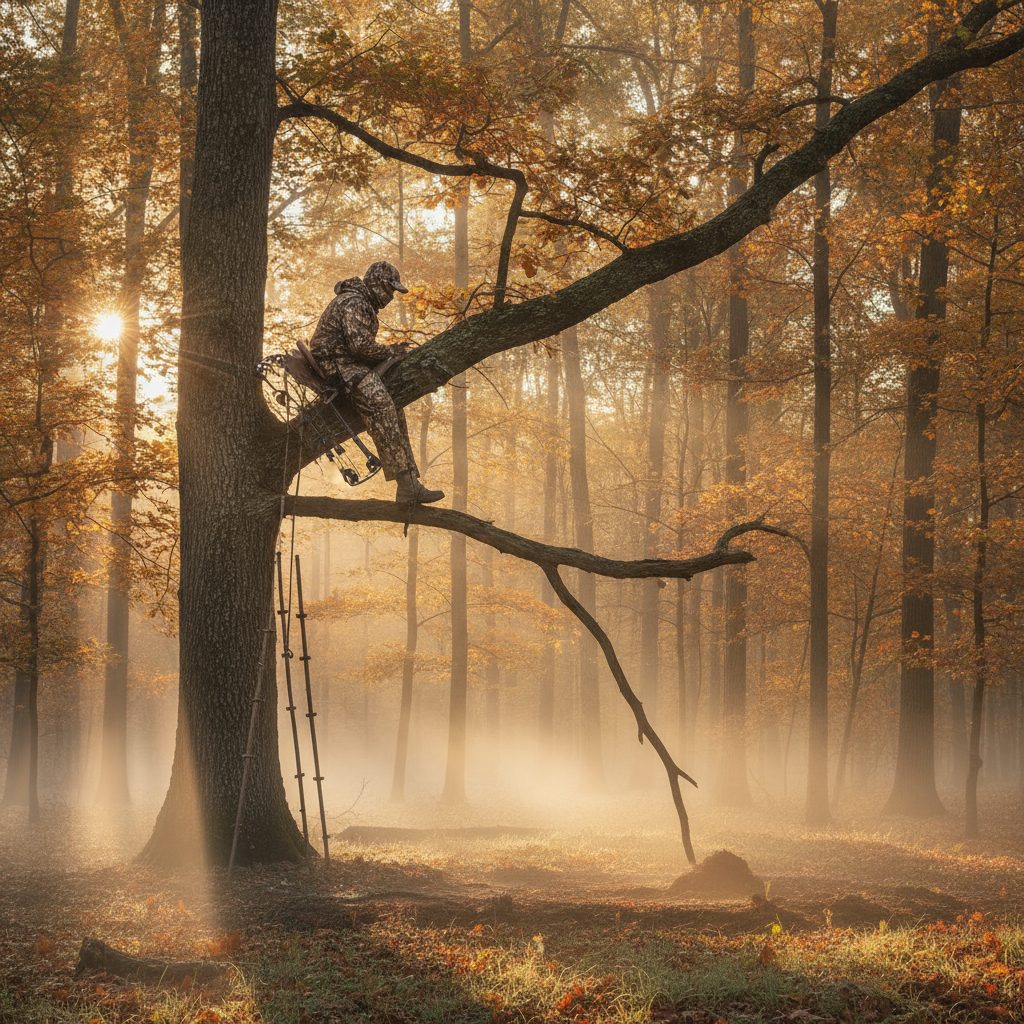
The chase window — roughly November 5 through November 13 for most of the Midwest and Northeast — is when saddle hunting's core advantage becomes almost unfair. You're not locked into a tree you climbed in October. You're reading the morning's thermals, checking your camera app, and hanging where the sign is today. That's it. That's the whole edge.
How to Play the Chase Phase in a Saddle
Stop hunting food. The food-to-bed pattern collapsed around Halloween, and a buck cruising for does at 10 a.m. doesn't care about your bean field. Shift to terrain — the pinch points, the funnels, the low saddles connecting two doe bedding areas. These are the places that compress deer movement into a shootable window regardless of where the herd wants to go. Set up between the beds, not at the dinner table.
- Hunt all day. Mid-morning through early afternoon is when a lot of big bucks are tagged during the chase. Pack a lunch. The guy who bails at 10 a.m. to beat traffic is leaving money on the table.
- Mark multiple trees. Before you climb, identify two or three setups on that same ridge for different wind directions. When the thermals shift at midday, you can drop down and move without burning the whole area.
- Stay shallow on entry. Your saddle rig lets you slip into tighter spots than a climber ever could, but that advantage disappears the second you walk down a deer trail to get there. Stay on the edges, use the terrain, keep your entry route clear of bedding cover.
- Call and rattle. Bucks are aggressive and covering ground. An aggressive rattling sequence followed by a few grunts can pull a cruising buck off his line and give you the shot angle you need. During the chase, they want to investigate.
When Lockdown Hits — Don't Quit
Here's the part most hunters get wrong. Around mid-November — roughly November 13 to 20 across the Midwest — the woods go eerily quiet. Bucks are paired with estrous does, tucked into the thickest cover on the property, barely moving. Trail cameras go dark. It feels like the rut is over. It is not over.
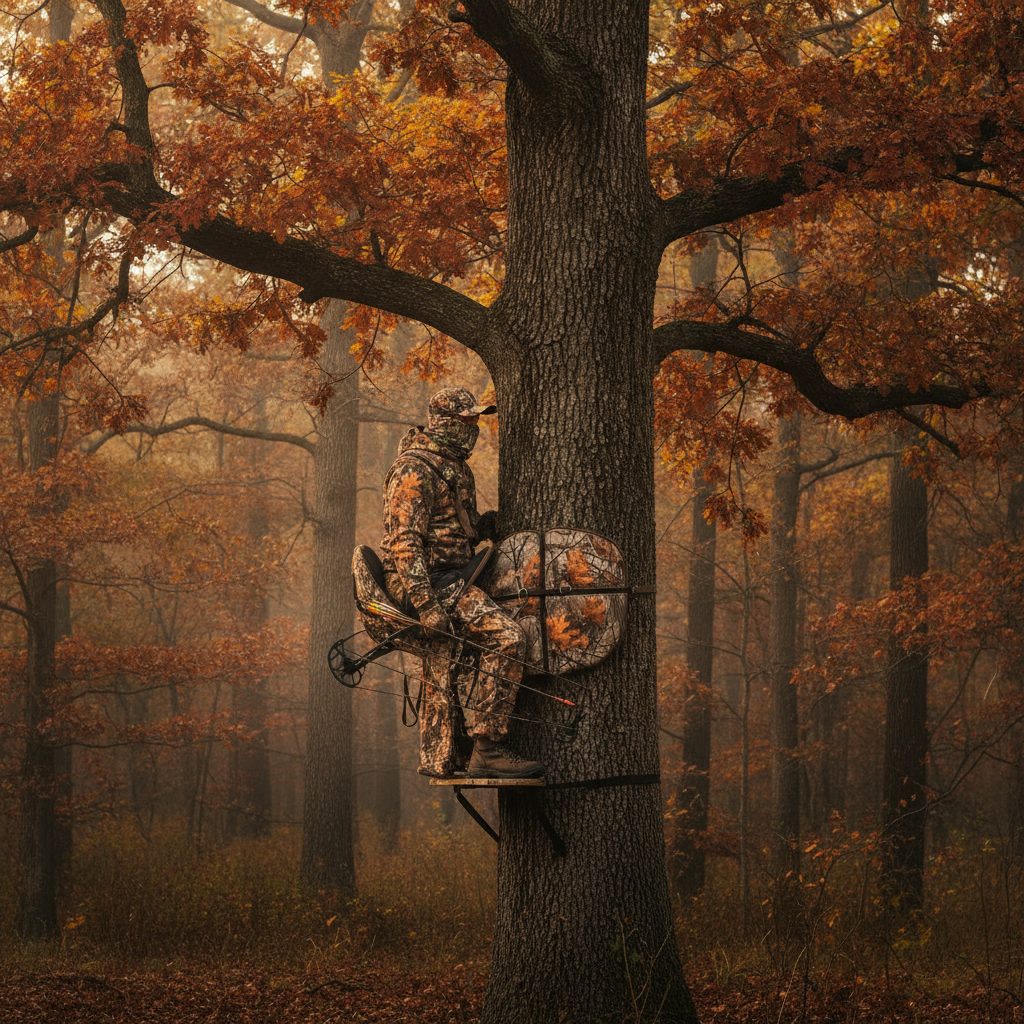
This is actually where saddle hunters have a second massive advantage that almost nobody talks about: you can get tight to doe bedding without burning a permanent setup. A fixed hang-on 200 yards from a doe bedroom is a fixed hang-on 200 yards from a doe bedroom — you can't move it. Your saddle? You can put it 60 yards from the nastiest, thickest, most miserable bedding thicket on the farm. Quietly. In the dark. And when a buck finally loses his doe and stands up looking for the next one, you're already in his living room.
Hunt smaller, secondary doe pockets — the ones that haven't cycled yet. Slip in at midday when thermals are stable and deer activity is at its lowest ebb. The hunters who keep killing in mid-November are the ones who go to the deer instead of waiting on them to show up somewhere comfortable.
The Gear Reality for This Week
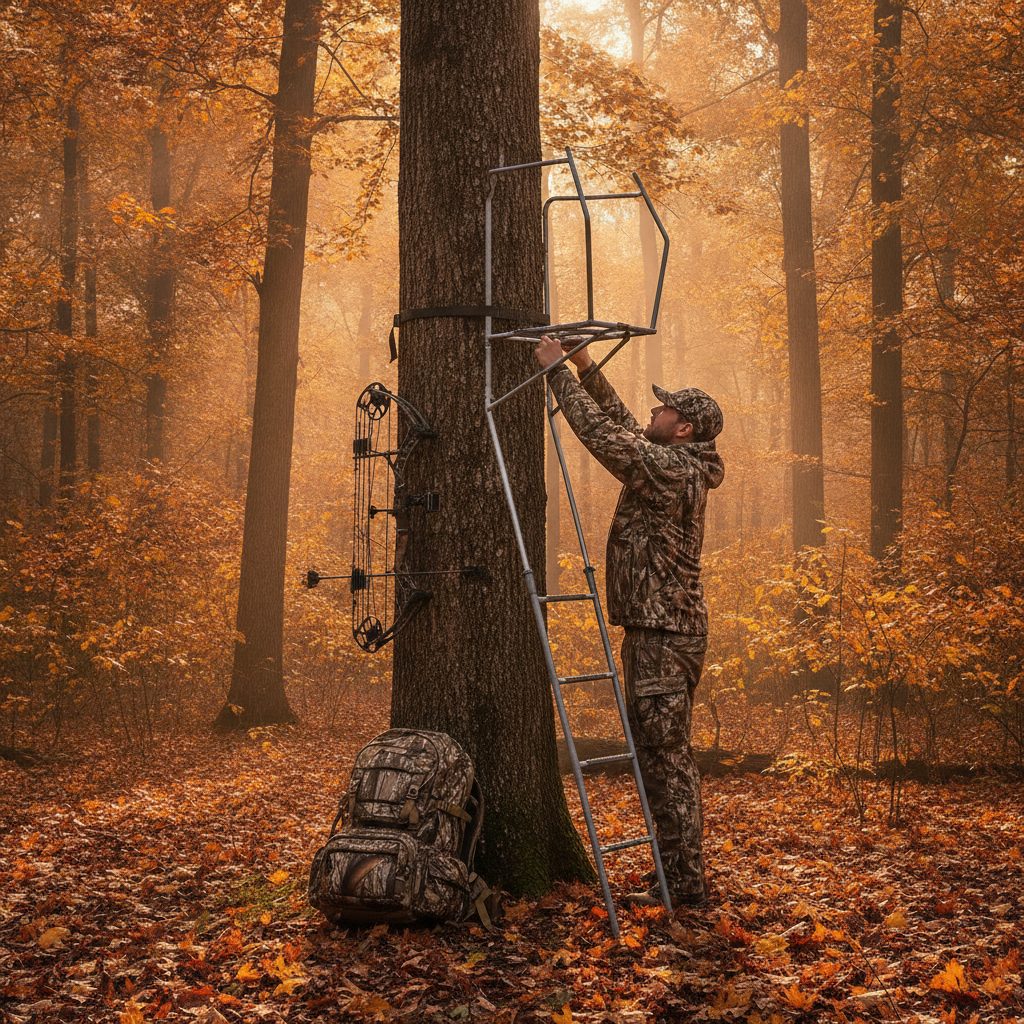
This is not the week for a one-stick setup or a sketchy rope situation. You're hunting all day, possibly multiple times a day, and you need a system you can trust when you're tired and it's cold and the light is going. Make sure your bridge and lineman's rope are dialed before you leave the truck. Carry a second set of gloves. Know your kit cold — literally.
The chase phase and lockdown together represent the best two-week window in whitetail hunting. You've got the most mobile, adaptable deer-hunting platform ever built strapped to your pack. Use it. Send it.