December Is When Your Saddle Earns Its Keep — Here's Why
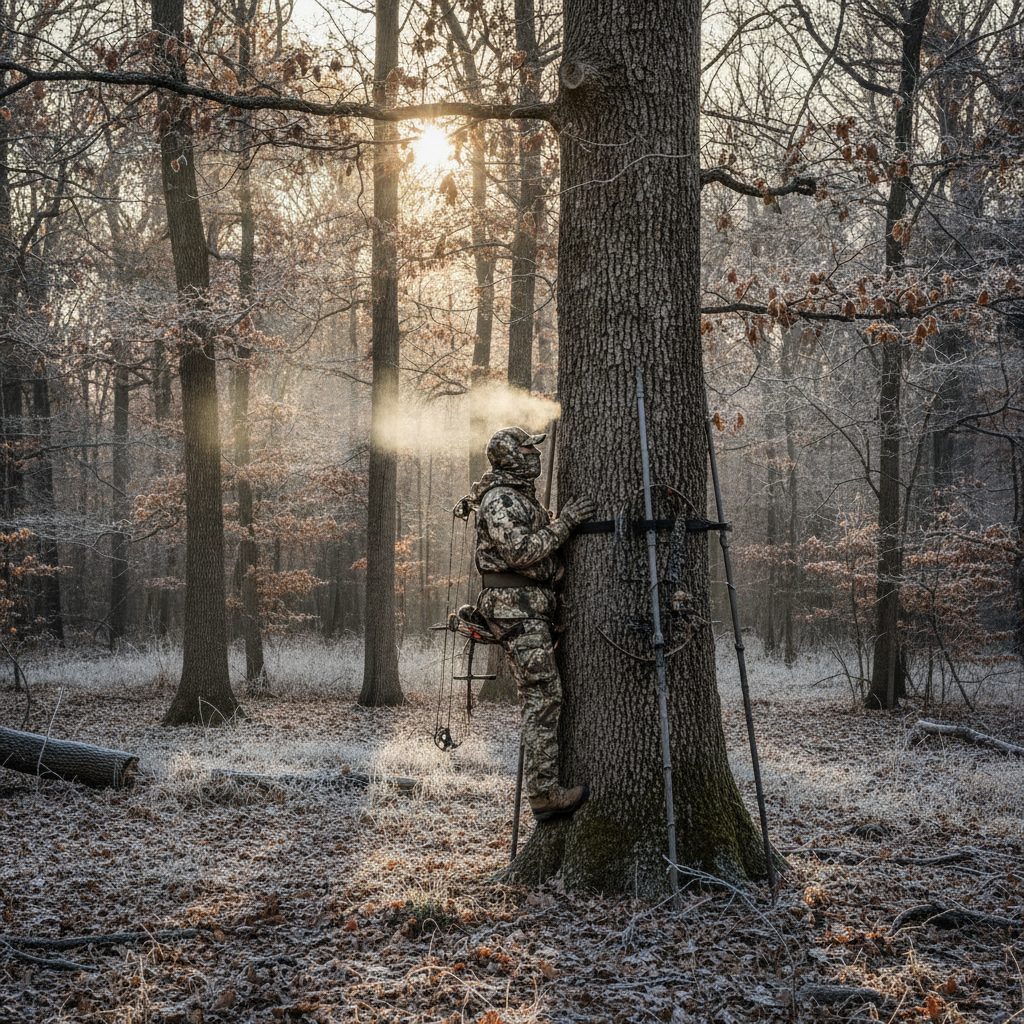
Most guys hang up the sticks after the rut fizzles out. That's fine. Let 'em. Because December is quietly one of the best opportunities of the entire season for a mobile saddle hunter who knows how to read the shift — and is willing to freeze a little to prove it.
The rut is done. The woods are naked. Every buck that's still breathing has been educated by weeks of pressure, hunter intrusion, and close calls. Deer movement has collapsed into one predictable rhythm: bed close, feed hard, repeat. That's not a problem for a saddle hunter. That's an invitation.
The Food-to-Bed Formula
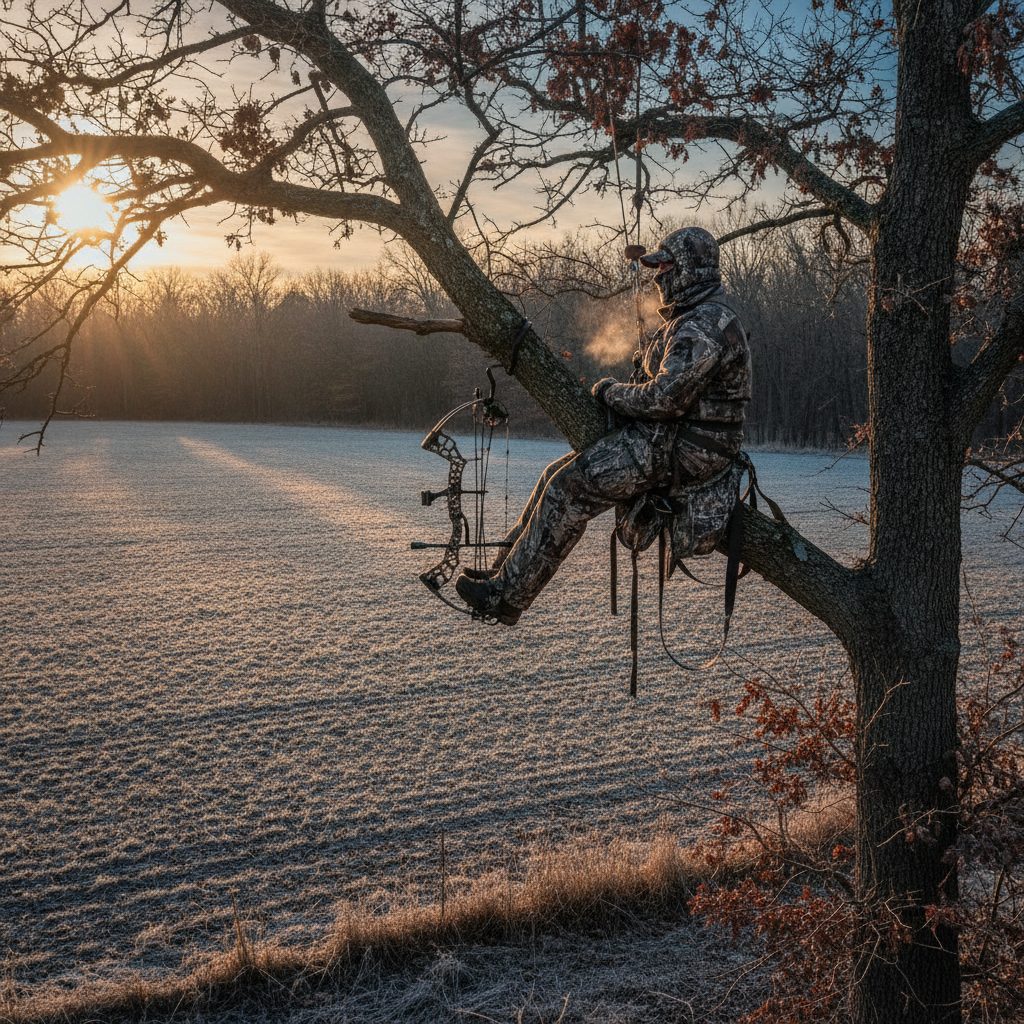
December whitetail movement isn't complicated — it's just unforgiving of bad setups. Food is the entire equation. Agricultural edges with standing crops, isolated oaks that dropped late, brassica plots gone sweet after a hard frost — that's where the deer are, and they're not wandering far from it. The post-rut energy deficit drives every decision a mature buck makes from here until the season closes. He's not cruising. He's surviving.
The smart play isn't to camp the food source. It's to slide in tight to the bedding side of that food-to-bed funnel — the last 80 to 150 yards between where a deer sleeps and where it wants to eat. That's your kill zone, and a saddle rig lets you get there quietly, without punching in a new hang or hammering rebar into frozen ground.
Compressed entry and exit routes matter more in December than any other month. Deer are skittish, the woods are quiet, and every leaf crunches like a gunshot. Getting in dark and getting out clean — without bumping deer off their feed — separates hunters who fill tags from hunters who don't.
Barren Trees: The Real Late-Season Challenge
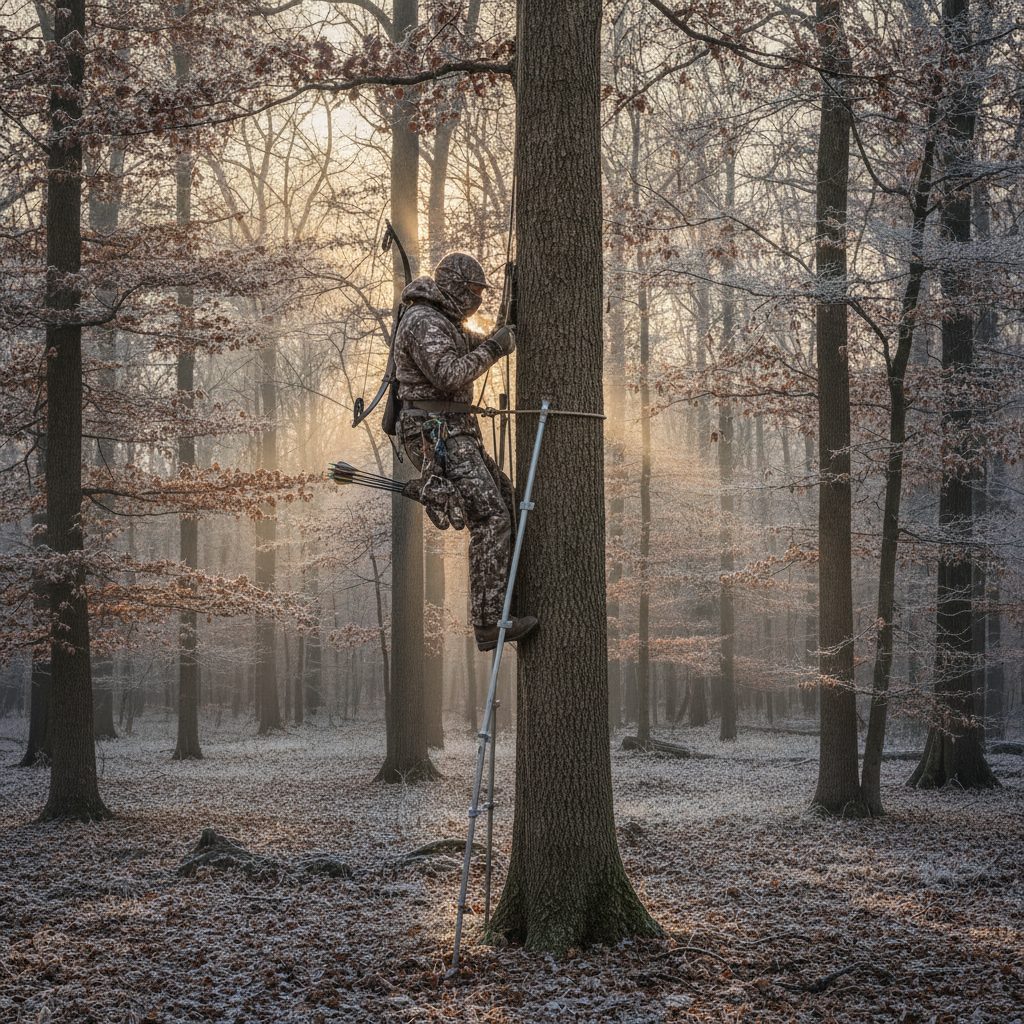
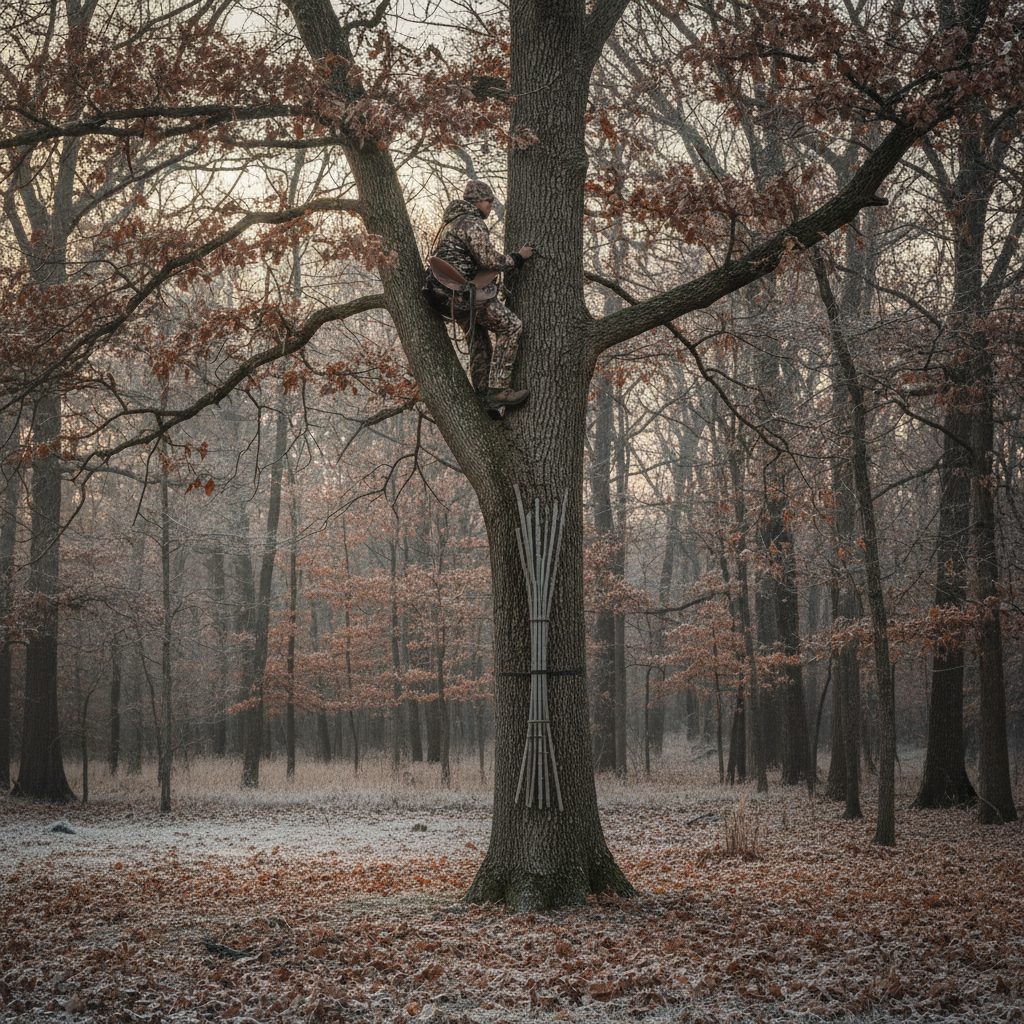
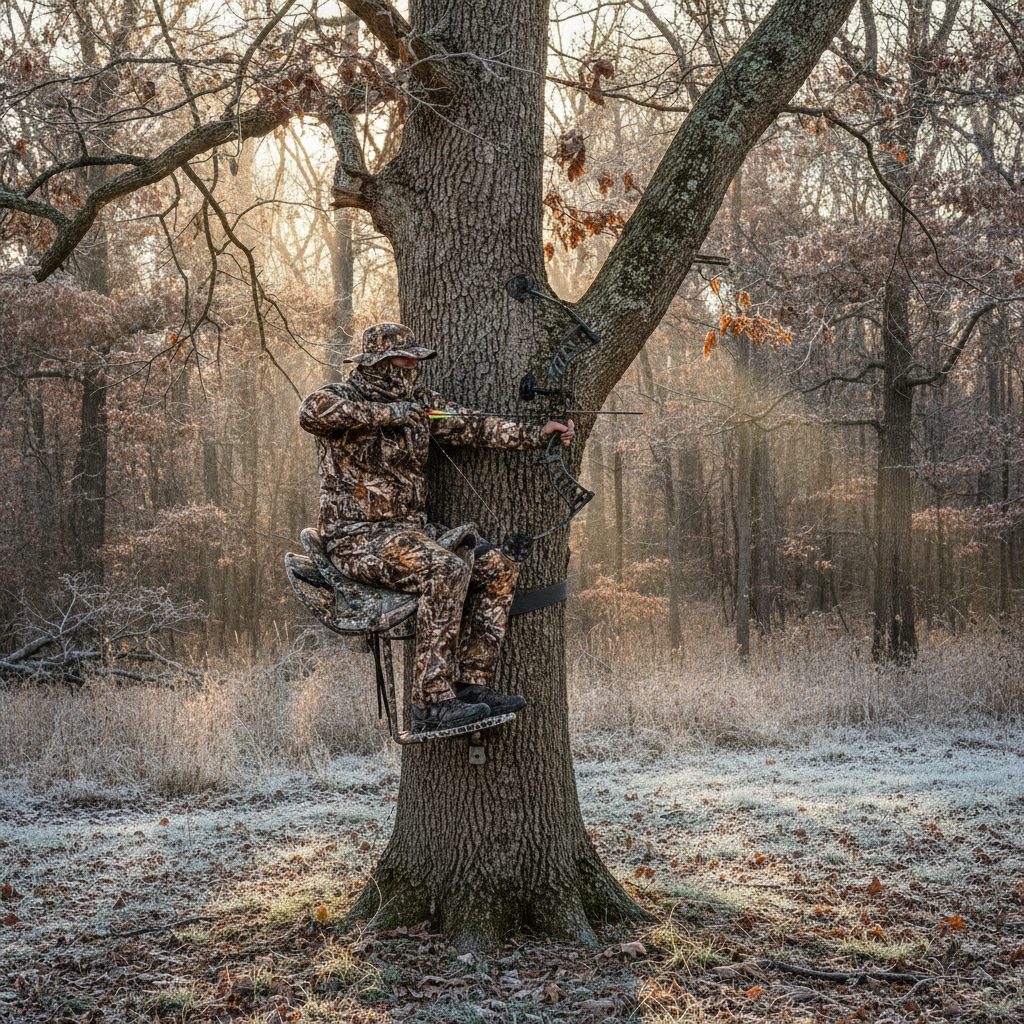
Here's the thing nobody talks about enough: the canopy is gone. Any tree you pick in December is essentially a silhouette against the sky. That changes your entire tree-selection calculus. You need trunk diameter and irregular bark over stand-out branches more than you need leaf cover, because there is no leaf cover. Pine stands, cedars, and gnarly multi-trunked oaks become premium real estate — not because of shot angles, but because they break up your outline at 20 yards when a deer cranes its neck upward.
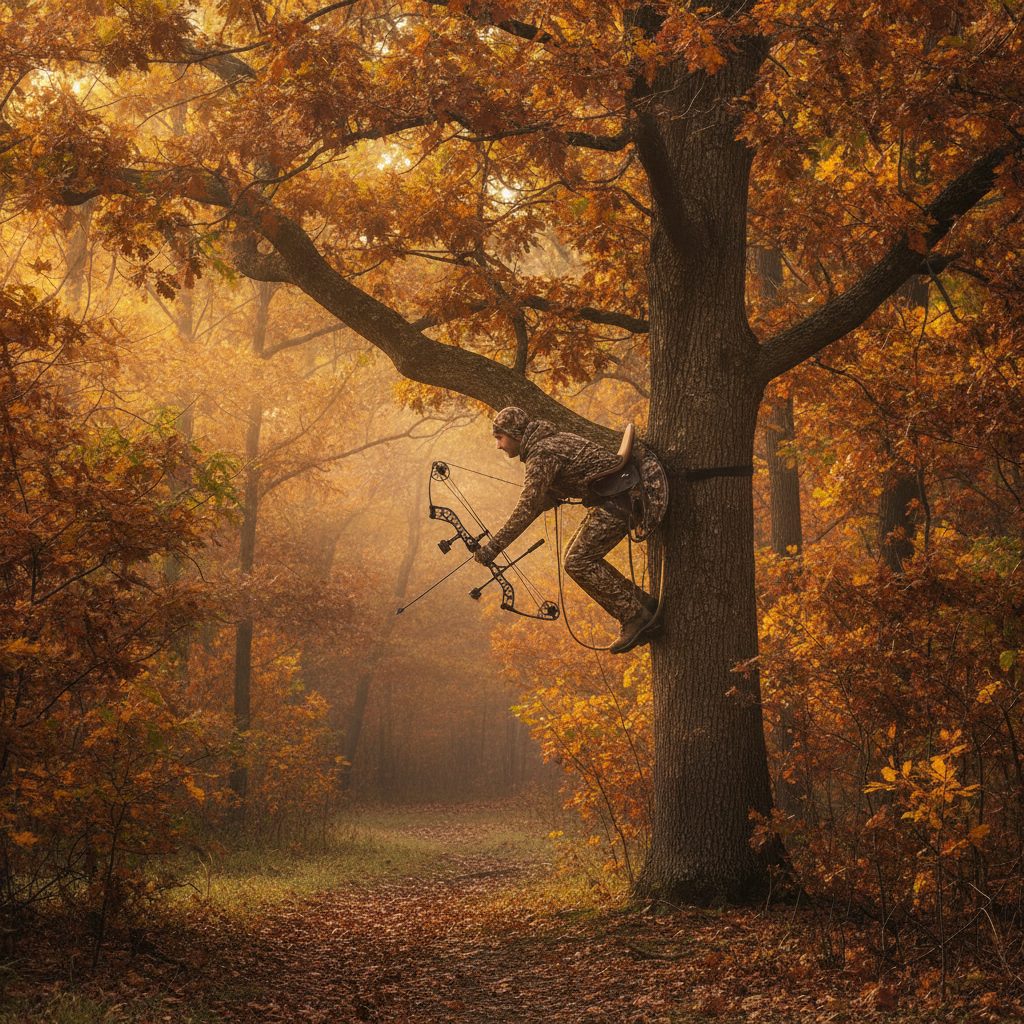
This is also where the saddle's low-profile hang pays dividends. You're pressed into the tree. You rotate with the deer. You don't have a bulky fixed platform advertising your position in every direction. In a bare December hardwood, that matters enormously.
Gear That Makes December Work
Cold is the other variable that breaks hunters in December. All-day sits sound great on paper; they're brutal at 18 degrees with a northwest wind. But the late-season food-to-bed setup almost never requires an all-day sit — it requires a disciplined afternoon hunt, in tight, with one shot at a buck working from his bed to his grocery store before dark.
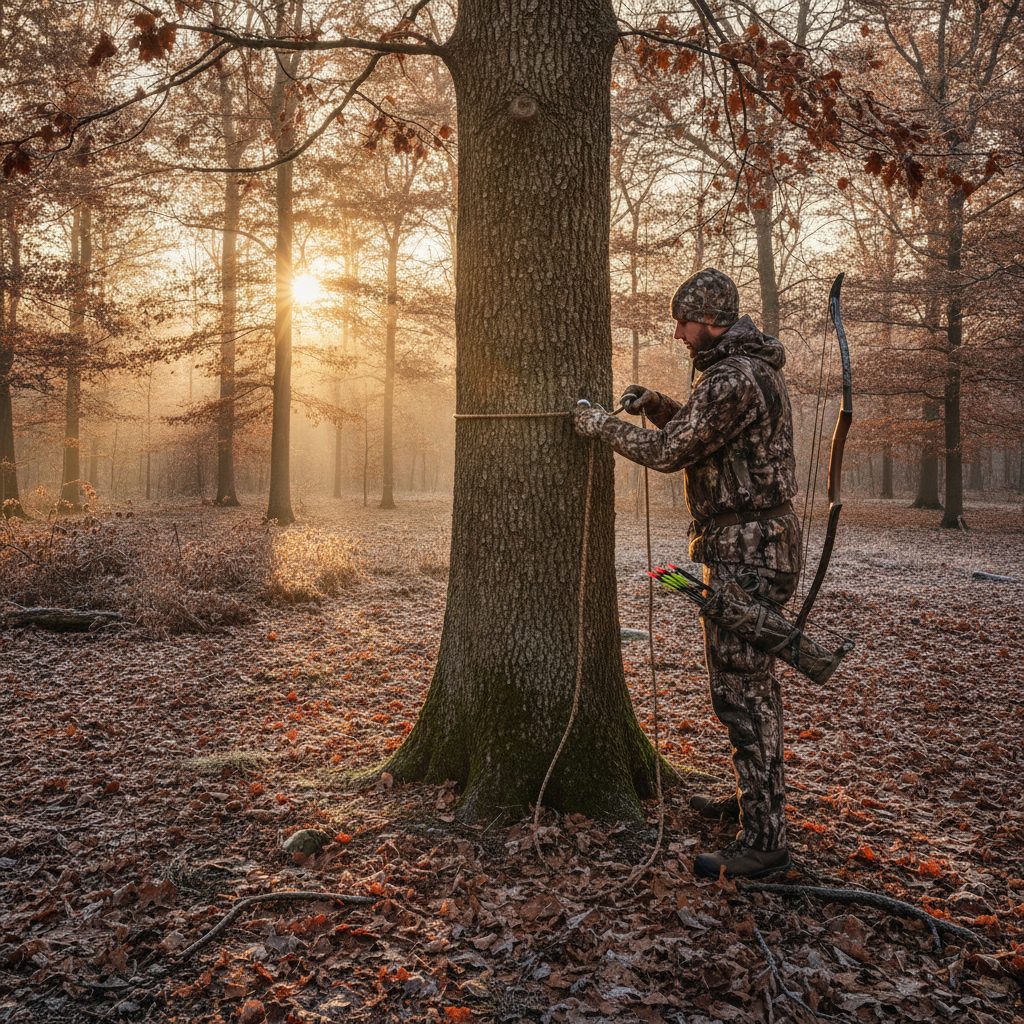
That said, your saddle rig needs to function with thick gloves and heavy layers. Buckles, bridges, and lineman's rope management all become harder when your hands are cold and your fingers are wrapped in wool. Gear that worked effortlessly in October can frustrate you into a blown setup in December. Run your whole system at home with your late-season gloves on before you ever hit the woods. Seriously — do it now.
Saddles like the Arsenal Cloud Freedom have added features specifically oriented around pack-and-go mobility, including a folding Transport Mode that makes the walk-in cleaner. That kind of thoughtful design matters most in December when every detail — scent, noise, silhouette — is amplified by pressured, edge-of-survival deer.
Pressure Pockets and the Public Land Edge
By the time December arrives, virtually every piece of ground has seen hunter pressure. The deer that are left know it. They retreat to low-pressure pockets — remote ridge fingers, swamp islands, terrain features that discourage casual hunters. These are exactly the spots a saddle hunter can reach that a traditional hang-on guy typically won't bother with.
Steep banks, thick creek bottoms, gnarly brushy hillsides — anywhere the access is inconvenient is exactly where late-season deer go to feel safe. Pack light, move slow, hang fast. You don't need a perfect tree. You need the right tree in the right spot, and a saddle lets you make that call on the fly without second-guessing your gear.
Send It Into December
The hunters who tag out in December are rarely the ones who hunted the hardest all season. They're the ones who stayed patient, read the shift, and adapted their approach when the rut hype faded and the real chess match began. A mobile saddle setup — dialed-in, practiced, and cold-weather ready — is about as good a tool as you can have for that final push.
The rut brought you close. December is where you close the deal. Don't leave that tag on the table because you packed it in a month too early.