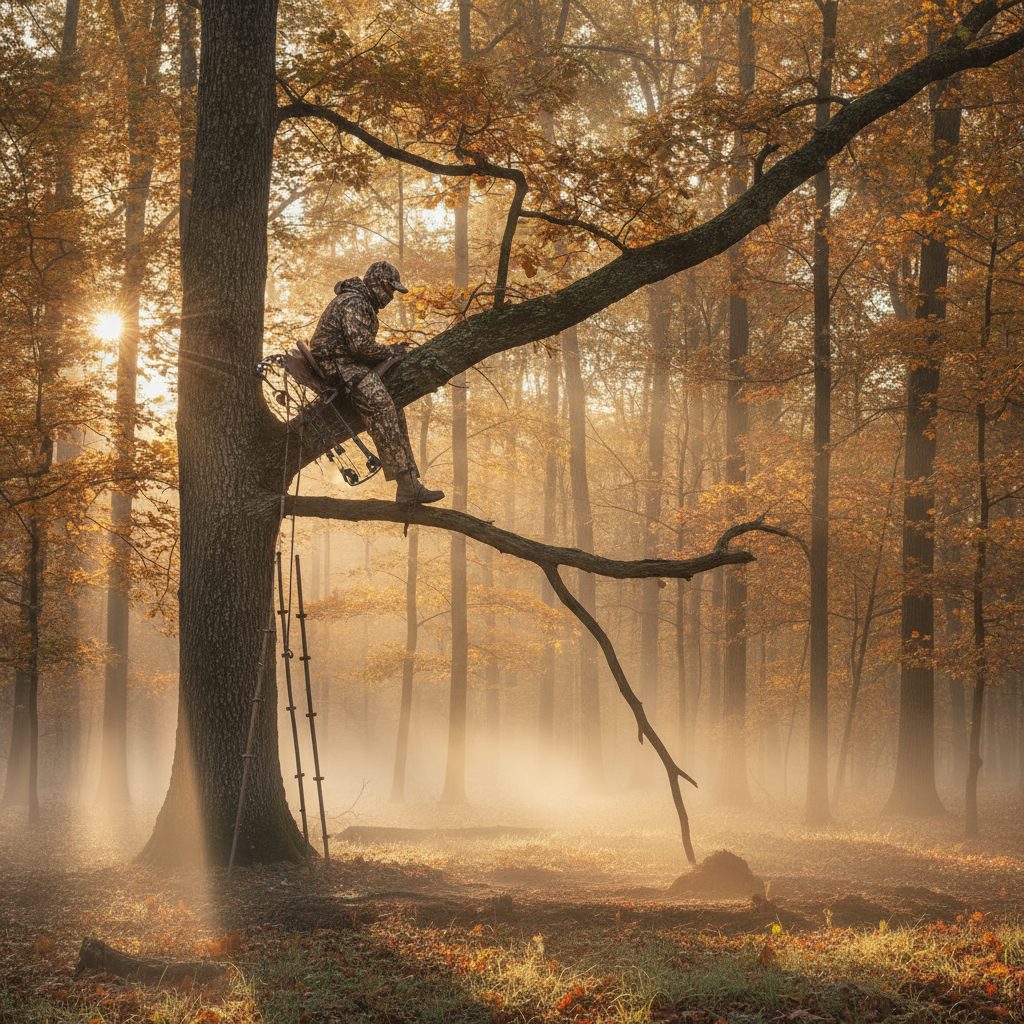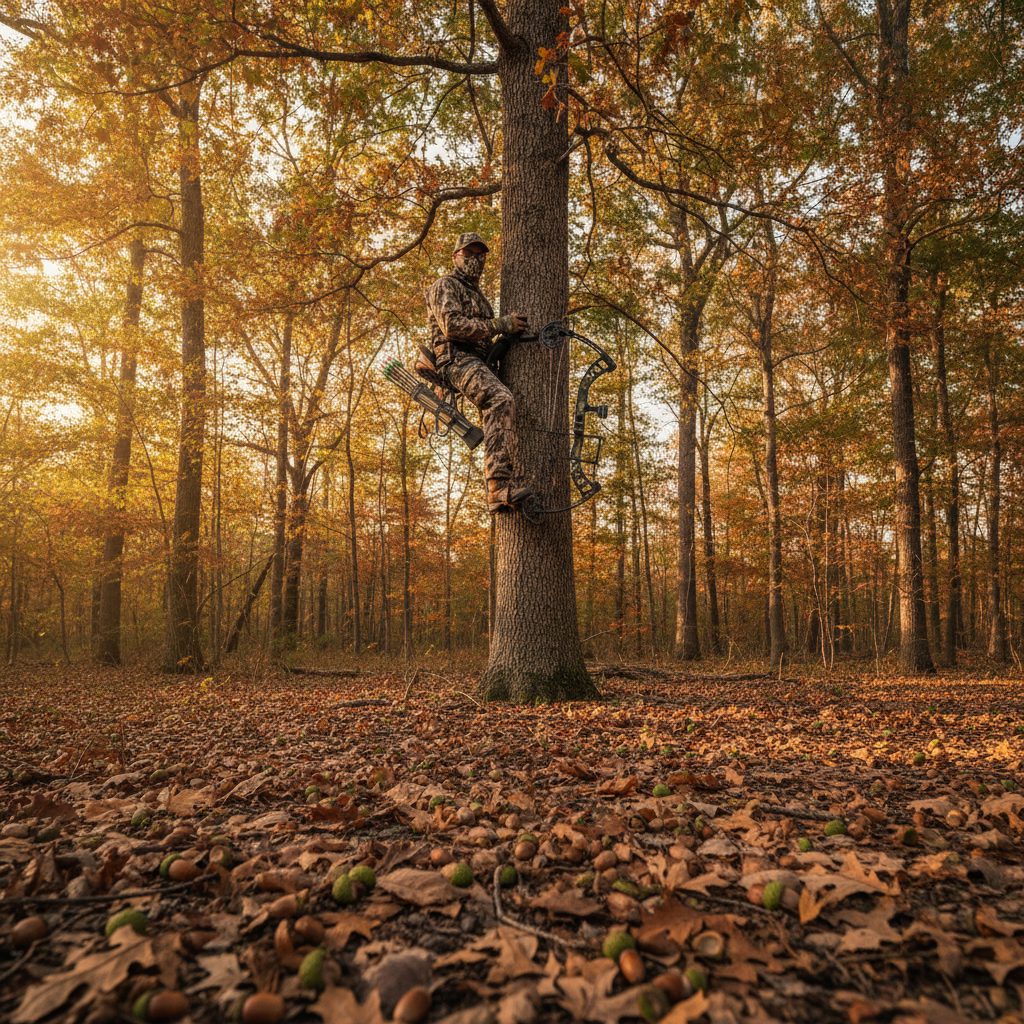
How Saddle Hunters Win the Wind Game During Pre-Rut
The pre-rut is a liar. Bucks that have been ghosts all September suddenly appear in daylight, rubs pop up overnight, and scrapes materialize on trails you've been watching for weeks. It feels like things are getting easier — and that's exactly when a blown hunt stings the most. One thermal shift, one wrong step in setup, and the best buck of your season disappears into the timber. For mobile saddle hunters, though, this window is a genuine advantage. Here's why — and how to play it.
Why the Pre-Rut Is a Wind and Thermals Minefield
Late September through the first week of November is when cruising bucks cover the most unpatternable ground of the season. GPS-collar research confirms that even bucks with small home ranges make periodic excursions well outside it during the breeding season — and those trips spike hard in the pre-rut seeking phase. A buck you've never seen on camera can materialize from any direction. That cuts both ways: your chances improve, but your scent bubble becomes a 360-degree liability.
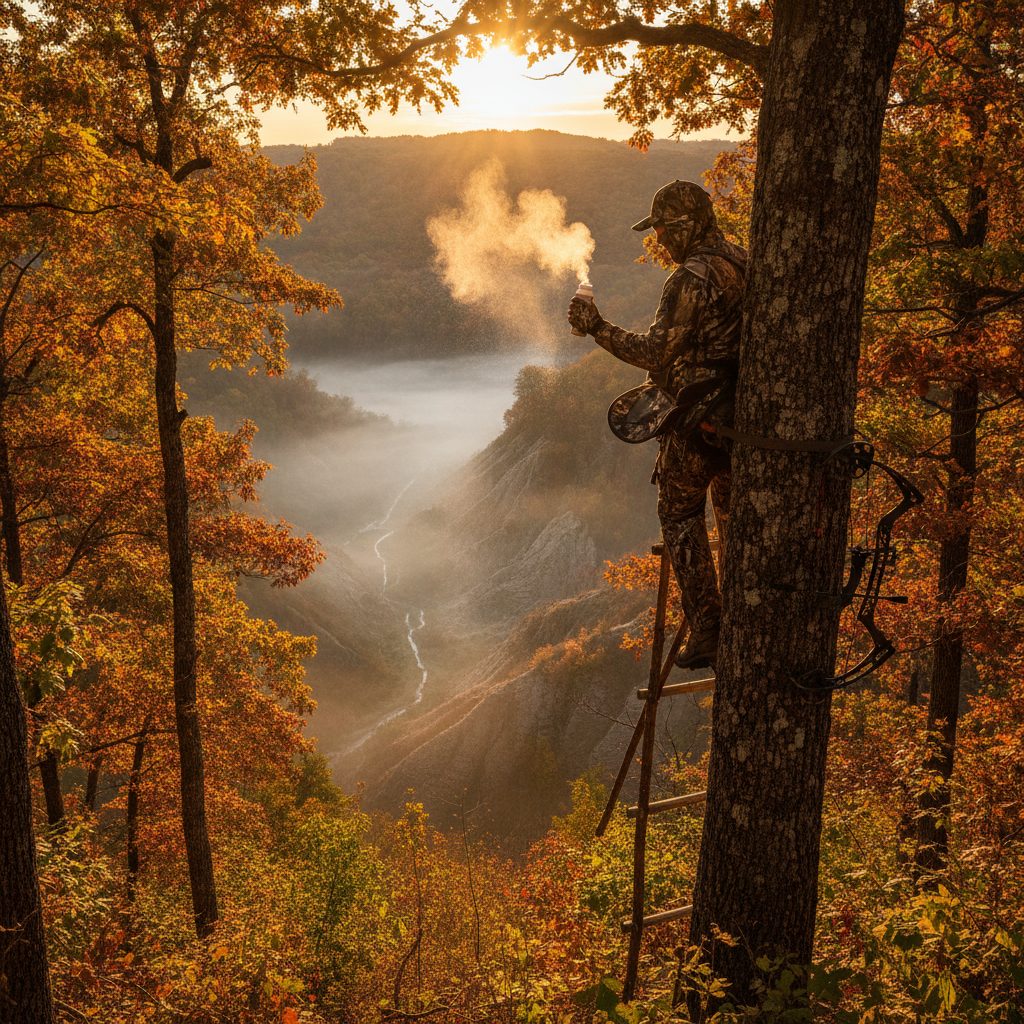
Thermals make it worse. In the morning, warming air rises, carrying your scent uphill and toward bedding bucks. Come evening, cooling air sinks back into drainages and bottoms — right where deer stage before moving to feed. Even modest elevation changes, think a creek drainage dropping just 50 or 100 feet, create predictable thermal currents that mature deer have been reading their entire lives. Add a swirling mid-day wind and you've got a scent puzzle that punishes hunters locked into a fixed stand position.
The conventional answer is to hang multiple stands and wait for the right wind. That works — if you have the access, the permission, and the time to pre-hang gear all over the property. Most hunters chasing mobile setups on public land or leases with limited hang time don't have that luxury. That's the saddle hunter's opening.
The 360° Advantage Isn't a Gimmick — It's Wind Insurance
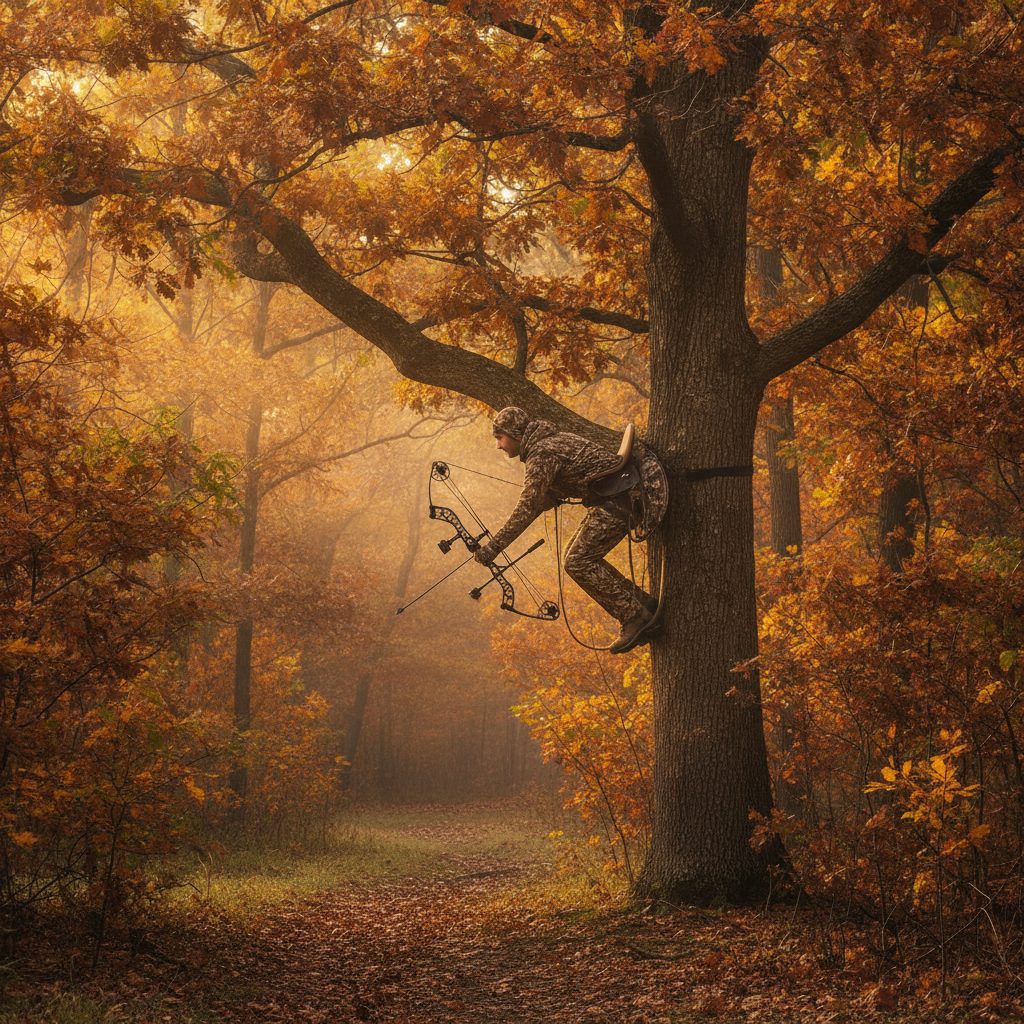
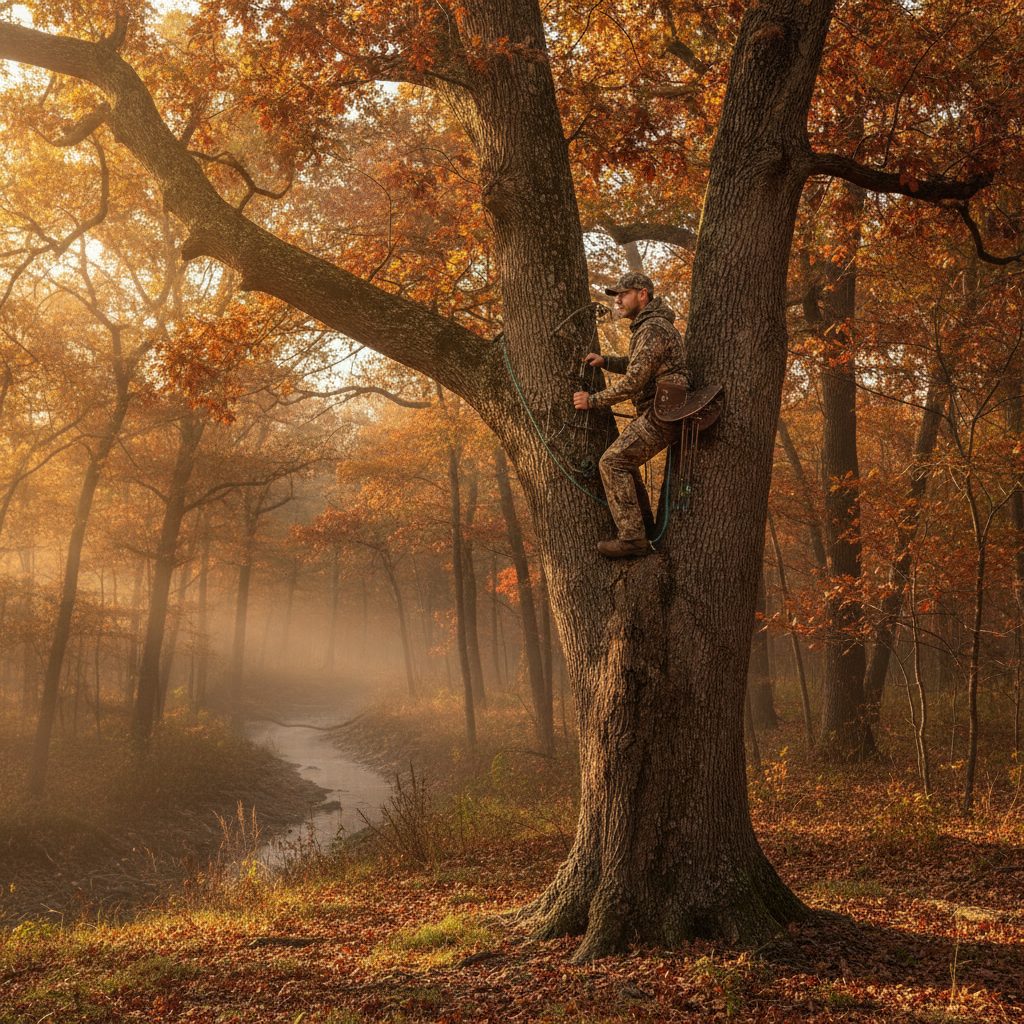
Here's the real edge of a tree saddle that doesn't get talked about enough: when a thermal hiccups mid-sit and pushes your scent toward where you expect a buck to emerge, you can quietly rotate around the tree. Reposition your lineman's bridge, adjust your tether angle, slide your platform to the opposite side, and boom — the tree trunk is now your scent barrier. No climbing down, no stand creaking, no drama. It takes about 90 seconds if you've practiced it.
That single move has saved sits that a hang-on or climber hunter would have had to abandon entirely. The tree becomes a tool, not just an anchor point. You can keep the trunk between your body and the direction a buck is working from, which is exactly the kind of real-time adjustment that turns near-misses into notched tags.
How to Read the Hunt Before You Climb
The pre-rut saddle strategy starts on the ground, before you ever strap in. A few things to lock in:
- Pick the entry side of the tree deliberately. Look at the terrain around your chosen tree and decide where thermals are most likely to push at first light vs. midday. Set up so your initial position keeps scent moving away from the most likely buck approach.
- Know your rotation options before you climb. Scout the tree in daylight. Make sure you can plant your platform on at least two sides without a branch cluster or steep lean blocking you.
- Watch the milkweed — or carry powder. A squeeze bottle of unscented powder tells you exactly what the air is doing at your height right now, not what the weather app guessed it would do. Check it frequently. Thermals can switch in under ten minutes on calm mornings.
- Prioritize leeward ridge setups when bucks are cruising. Bucks favor ridgelines where they can bed and cruise with wind covering their back. Intercept them on the downwind side of a ridge point or saddle in the terrain, where you can work scent toward the open side while watching the pinch.
Timing Your Moves With the 2026 Rut Window
Most of the northern whitetail range is sitting right in the pre-rut seeking phase right now — bucks are making scrapes, freshening rubs, and beginning to range. The calendar points toward late October as the highest-value overlap of temperature drops and peak seeking behavior across the Midwest and Northeast. That means the next four to five weeks are the window to be aggressive about getting mobile setups into new terrain.
Don't over-commit to a single tree this time of year. The beauty of a run-and-gun saddle rig is that when fresh sign tells you a buck shifted his travel route, you can shift with him — same afternoon if needed. A quick e-scout on a topo app, a boot-leather look at new rubs or a blazing hot scrape line, and you're climbing a new tree before the evening sit. That adaptability is worth more than any single perfect stand location.
The rut doesn't care about your best-laid plans. But if you're swinging around a tree trunk in a saddle while a mature buck works a scrape 30 yards out, you're doing something right. Send it.